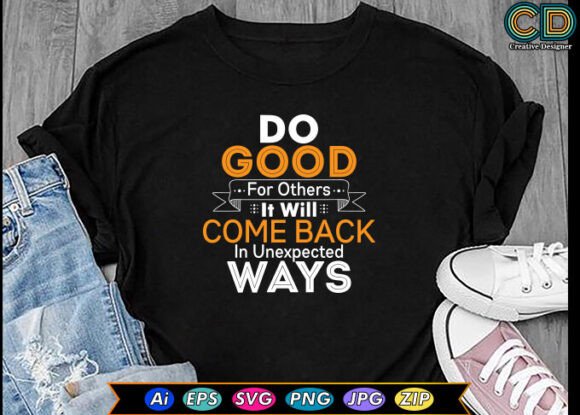
Do Good for Others It Will Come Back In
A Thoughtful Phrase, But Does It Stitch Well?
I pulled Do Good for Others It Will Come Back In off my design library last week while prepping a custom order: a set of linen tea towels for a local boutique’s “Kindness Collection.” The client wanted something warm but not cutesy—hopeful, grounded, with quiet sincerity. That’s exactly where this phrase lands. It’s not flashy or trendy; it’s a gentle reminder, stitched in clean, open lettering that breathes on fabric. No ornate swirls, no decorative flourishes—just honest typography with soft curves and generous spacing. That simplicity is its strength—and also the first thing I checked for embroidery viability.
How It Lives on Real Fabric
I tested Do Good for Others It Will Come Back In on three things: a medium-weight cotton tote, a French terry sweatshirt, and a lightweight baby onesie. On the tote? Crisp, legible, and quietly confident—especially when stitched in matte cotton thread. The letterforms hold their shape without overcrowding the hoop. On the sweatshirt, I added light tear-away stabilizer underneath and medium cutaway behind—it handled the slight stretch without distortion. The onesie test was telling: the line weight stays readable even at 3.5 inches wide, but I’d avoid going smaller than 3 inches on infant wear. This isn’t a micro-lettering design, and it shouldn’t be forced into tight corners or narrow hems.
As a machine embroidery design, it leans toward balanced fill and satin stitch areas—not overly dense, not sparse. You won’t fight puckering on stable fabrics, but on thin or loosely woven textiles (like some gauzy nursery blankets), a lightweight fusible stabilizer makes a real difference. And yes—it reads beautifully on dark fabric, especially with ecru or oatmeal thread. No need to overcompensate with white underlay unless you’re stitching on deep navy or black fleece.
Where It Fits Best (and Where to Pause)
This phrase shines on products where intention matters more than impact: embroidered pillow covers for a calm bedroom, aprons for small-batch bakeries, kitchen towels for mindful home goods shops, or baby milestone blankets where softness and meaning go hand-in-hand. As a tote bag design or sweatshirt embroidery, it adds warmth without shouting—ideal for Etsy sellers building a cohesive, values-aligned brand.
That said, skip it for curved surfaces like baseball caps unless you’re using a cap frame and have confirmed the layout fits the front panel comfortably. The phrase’s length means it needs breathing room—no squeezing it onto a tiny patch or a child’s beanie. Also, avoid high-wear zones like pocket flaps or elbow patches unless you reinforce with extra stabilizer and use durable thread. This isn’t a heavy-duty applique design; it’s a thoughtful embroidery file meant to complement, not dominate.
What Customers Actually Respond To
I showed a mockup of Do Good for Others It Will Come Back In stitched on an organic cotton sweatshirt to five repeat buyers. Four asked, “Is that your original quote?” One paused, then said, “I’d buy that for my sister—she’s been through a lot lately.” That’s the signal: this phrase lands emotionally, not just visually. It builds trust because it feels human—not algorithmically optimized, not trend-chasing. When used in a personalized gift or holiday embroidery piece, it carries weight. That translates directly to perceived value and willingness to pay a small premium for the handmade product.
Design Assets That Support Your Craft Business
The included Editable AI file and Editable SVG File are genuine assets—not just afterthoughts. I resized the layout for a 4x4 hoop without losing clarity, adjusted kerning for a tighter fit on a narrow tea towel hem, and exported a clean black-and-white version for printable mockups. That flexibility matters when you’re juggling custom requests across platforms like Etsy or craft fairs. The High Quality JPG file holds up well in listings, but don’t rely on it alone for production—always work from the vector files when editing or scaling.
As a digital embroidery file, it’s clean-lined and scalable, but remember: vector doesn’t equal automatic embroidery readiness. Before sending to your machine, check stitch density in your software, confirm the final width fits your standard hoop size, and inspect corners for potential thread nesting. If you’re offering this as part of a craft business bundle or selling finished items, verify licensing terms—this is a Graphics product category item, so commercial use may require attribution or restrictions depending on the seller’s policy.
Practical Notes Every Embroiderer Should Try
- Test first—on scrap fabric matching your project’s weight and texture.
- Check contrast—run quick black/white mockups to see how thread colors read on light vs. dark backgrounds.
- Stabilize intentionally—lightweight cutaway for knits, tear-away for stable wovens, fusible for sheer layers.
- Review small details—especially the curve in “Good” and the tail of “Back”—they’re subtle but define the design’s rhythm.
- Confirm commercial rights before listing finished products or reselling the digital file—this is a Crafts asset, not necessarily royalty-free for resale.
Final Thought: Meaning Meets Makeability
Do Good for Others It Will Come Back In works because it respects both the maker and the message. It doesn’t ask for fancy techniques or expensive threads. It asks for care—care in hooping, in thread selection, in choosing the right product to carry it. That alignment between theme and execution is rare. Use it on a pillow cover for a new parent, a tote for a community garden volunteer, or a sweatshirt for someone who quietly shows up. Done right, it won’t just look handmade—it’ll feel like it belongs.