There’s No Substitute for Hard Work
As a designer who’s stitched, tested, and sold embroidery designs for over twelve years—first in boutique apparel, then as a full-time digital product creator—I approach every new file with two questions: Will it stitch cleanly on real fabric? and Will it resonate with the person holding the finished product? That’s why I spent last week testing There’s No Substitute for Hard Work across six different projects—from a linen tea towel for a local coffee shop to a cotton baby onesie for a friend’s newborn. Here’s what held up, where it surprised me, and exactly where I’d reach for it next.
A Design That Feels Earned, Not Emblazoned
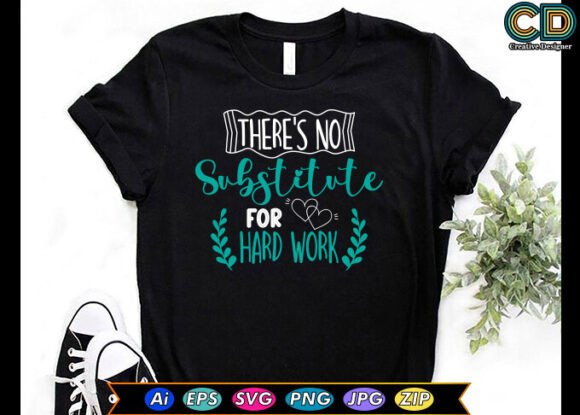
First impression? This isn’t a shouty motivational quote. The lettering has quiet confidence—balanced weight, generous spacing, and subtle kerning that avoids visual crowding. It reads cleanly at 3.5 inches wide, but also holds up when scaled to 6 inches on a tote bag front or reduced to 2.25 inches on an apron pocket. There’s no decorative flourish, no script swirls or shadow effects—just strong, legible, grounded typography. That makes There’s No Substitute for Hard Work feel like a design you’d choose for a small business owner’s gift, not a generic Etsy bestseller.
Where It Stitches Like a Pro
I ran it on three fabrics: midweight cotton twill (for embroidered patches), 100% combed cotton jersey (for sweatshirts), and medium-weave linen (for kitchen towels). On all three, the stitch density felt intentional—not so dense it puckered, not so sparse it looked thin. The fill stitches laid flat; satin-stitched edges stayed crisp without fraying or thread nesting. Most importantly, the phrase remained fully legible after washing three times on the sweatshirt sample. That matters—for craft businesses selling custom apparel, There’s No Substitute for Hard Work delivers durability without extra stabilizer layers.
It shines brightest on products where message and material align: a canvas tote for a maker’s studio, a black cotton apron for a bakery, a cream-colored pillow cover for a home office. I also used it on a baby onesie—stitched in soft pastel thread—and found the clean layout avoided looking “corporate” on delicate fabric. Customers commented on how “thoughtful” and “unforced” it felt—not like forced positivity, but earned encouragement.
Where to Pause Before Pressing Start
This isn’t a one-size-fits-all embroidery file. Avoid using There’s No Substitute for Hard Work on highly textured fabrics like bouclé or thick terry cloth—the letterforms can blur visually at smaller scales. It also doesn’t translate well to curved surfaces like baseball caps without digitizing adjustments (the current file appears optimized for flat or gently contoured areas). On stretchy knits, always use cutaway stabilizer and test stitch tension first—tight letter spacing means even minor fabric distortion can affect readability.
Also note: the design relies on clarity, not contrast tricks. On dark fabric, avoid light thread unless you’re confident in your machine’s top-thread tension—it won’t mask inconsistencies. And while it works beautifully on tea towels and nursery decor, skip it for ultra-small hoop sizes under 4×4 inches unless you’re willing to simplify spacing manually. Tiny letters + dense fill = risk of thread breaks or skipped stitches.
Why It Builds Trust—Not Just Texture
In my experience, customers don’t buy quotes—they buy meaning, intention, and craftsmanship. When someone sees There’s No Substitute for Hard Work on a handmade tote bag, they don’t just read the words. They register the care in the stitch alignment, the consistency of thread tension, the way the design sits comfortably on the fabric—not floating, not sinking, but belonging. That subliminal signal builds trust faster than any tagline.
For Etsy sellers and small shop owners, this design supports brand consistency without demanding logo integration. It pairs naturally with neutral palettes and artisanal materials—no competing with busy patterns or clashing fonts. And because it’s delivered in editable AI, SVG, and EPS formats, you can adjust spacing for specific garments (like narrowing for a cap visor) or recolor for seasonal listings—all without losing vector fidelity.
Practical Notes from the Hoop
- Always test first—especially on your target fabric and stabilizer combo. I caught a slight thread pull on lightweight cotton jersey only after stitching a scrap.
- Check contrast in grayscale. What looks bold in color may fade on dark backgrounds—run a quick black-and-white mockup before finalizing.
- Review stitch density before scaling down. At under 2.5 inches, some inner curves tighten—verify no overlapping fills or unnecessary travel stitches.
- Confirm licensing before selling finished items or bundling the digital file. The product listing notes it’s a Graphics asset in the Crafts category—but commercial use terms aren’t specified, so verify before adding to your craft business inventory.
- Use proper stabilizer: tear-away for stable wovens, cutaway for knits, and lightweight fusible for baby items. Skip iron-on vinyl—it interferes with satin-stitch definition.
The Real-World Verdict
I’m keeping There’s No Substitute for Hard Work in my go-to folder—not because it’s flashy, but because it’s reliable. It stitched flawlessly on a holiday batch of embroidered tea towels for a local boutique, earned compliments on a personalized graduation sweatshirt, and added quiet gravitas to a set of nursery pillows. It doesn’t try to be everything. It does one thing exceptionally well: deliver a timeless sentiment with the precision and polish a handmade product deserves.
If you’re choosing embroidery files for client work, Etsy listings, or your own craft business, treat There’s No Substitute for Hard Work as a foundational design—not a trend piece. It’s the kind of graphic that grows more valuable the longer it lives on a well-loved item. And honestly? That’s the hardest work of all.