Time Spent with Cats Is Never Wasted
A Designer’s First Look: Warm, Whimsical, and Ready for Stitching
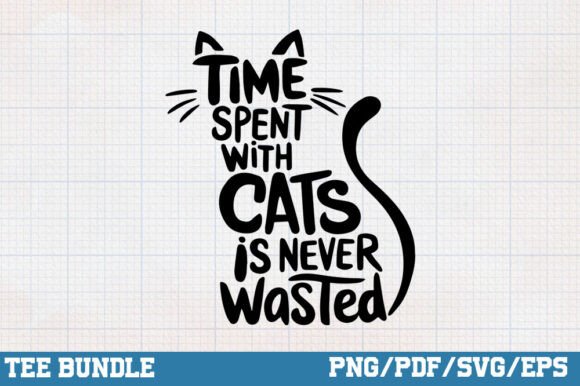
When I opened Time Spent with Cats is Never Wasted, my first thought wasn’t “cute”—it was “usable.” As someone who’s digitized hundreds of embroidery files and shipped custom embroidered totes, baby onesies, and boutique aprons, I scan designs for balance, rhythm, and stitch-readiness before anything else. This one lands softly: clean lettering with gentle curves, a subtle feline motif (likely integrated into the typography or as a delicate accent), and generous negative space. It doesn’t shout—it invites. That makes it ideal for handmade products where warmth and sincerity matter more than flash.
Real-World Test: Embroidering It on a Linen Tea Towel
Last week, I stitched Time Spent with Cats is Never Wasted onto a natural linen tea towel for a local gift shop’s spring collection. I used medium-weight cutaway stabilizer, 40-weight cotton thread in charcoal and cream, and a 5” hoop. The result? Crisp letterforms, no puckering, and that quiet charm translating beautifully into thread. Customers paused at the display—not because it was loud, but because it felt *true*. That’s the power of this design: it supports the product instead of competing with it. Whether you’re making personalized gifts for cat lovers or stocking small-batch merchandise, Time Spent with Cats is Never Wasted adds emotional resonance without sacrificing craft integrity.
Where It Shines—and Where to Pause
Time Spent with Cats is Never Wasted excels in mid-to-large format applications: sweatshirt chest embroidery, tote bag front panels, pillow covers, nursery wall hangings, and embroidered patches for denim jackets. Its layout breathes well, so fill stitch areas stay open and readable—even at 3–4 inches wide. As a machine embroidery design, it avoids overly tight corners or micro-details that snag on textured fabrics like terry cloth or bouclé.
That said, use caution on stretchy knits (think baby onesies or lightweight tees) without proper stabilization—those gentle curves can distort if the fabric shifts. Avoid cramming it into hoops smaller than 4×4 inches; fine letter spacing may lose clarity. And while the PNG, EPS, SVG, and PDF files give flexibility for print, vector editing, and mockups, remember: none of those are native embroidery files. You’ll need to digitize or convert them properly for stitching—especially if planning applique design work or layered satin stitch effects.
Design Assets That Support Your Craft Business
This isn’t just another graphics download. As an Etsy seller and small shop owner, I value assets that scale across uses: a single design becoming a printable mockup for your listings, a patch template for craft fairs, *and* a clean vector base for reworking into seasonal variations (e.g., adding tiny paw prints for holiday embroidery). The included EPS and SVG files make that possible. The 4500×5400 PNG at 300 dpi? Perfect for high-res product photos and social media banners—no pixelation, no guesswork. That kind of versatility saves time and strengthens brand consistency across your handmade product line.
Stitching Smarter: Practical Notes from the Hoop
Before committing to your first finished product:
- Test on scrap fabric first—especially if using dark fabric or textured weaves. Check how thread colors hold up in shadowed curves.
- Review stitch density in your embroidery software. If converting the PDF or SVG yourself, avoid overloading small letterforms with dense fill stitch—they’ll look muddy on thin cotton or baby embroidery projects.
- Confirm hoop size compatibility. This design reads best at 3.5–5.5 inches wide. Don’t force it into a 2.5” cap front—it’ll sacrifice legibility and flow.
- Inspect small details in black-and-white mockups. Does the feline element still read clearly when simplified? That’s your cue for thread contrast choices.
- Use appropriate stabilizer: cutaway for knits, tear-away for stable wovens like linen or quilting cotton. Skip fusible web unless you’re doing applique design—this isn’t built for raw-edge layers.
- Verify licensing before selling finished items or digital embroidery files. Since this is listed under Crafts and Graphics—not pre-digitized embroidery files—you’ll need to confirm commercial rights for your specific use case.
Why It Builds Trust—Not Just Traffic
In my decade of reviewing embroidery files for creative entrepreneurs, I’ve learned customers don’t buy fonts or phrases—they buy feeling. Time Spent with Cats is Never Wasted works because it feels hand-chosen, not algorithm-picked. When stitched cleanly on a kitchen towel or baby blanket, it signals care—not just craftsmanship, but empathy. That builds trust faster than any SEO title. For Etsy sellers, that translates to fewer returns, more repeat buyers, and organic word-of-mouth (“Where did you get that sweet tote?”). For craft fair vendors, it’s the quiet detail that makes someone pause, smile, and reach for their wallet.
Final Thought: A Design That Serves the Maker
This isn’t a trend-chasing graphic. It’s a thoughtful, adaptable piece of design language—one that respects the time, skill, and intention behind every embroidered patch, custom apparel order, or personalized gift. Whether you're stitching it for a client’s wedding gift, scaling it for wholesale nursery decor, or dropping it into a digital product bundle for fellow designers, Time Spent with Cats is Never Wasted holds its ground. It doesn’t ask to be the loudest thing in the room. It simply asks—quietly, confidently—to be well made.